Why Won’t My Brain Shut Off at Night? How to Calm Racing Thoughts Before Bed

You finally crawl into bed after a long day.
Your body is exhausted. You’ve been waiting all day for this moment.
The room is quiet. Your responsibilities are done. Your phone is put away.
And then suddenly…
Your brain decides it’s the perfect time to think about everything.
The conversation you had earlier.
The thing you forgot to do.
The email you need to send tomorrow.
The awkward thing you said three years ago.
And then comes the thought so many anxious overthinkers know:
“Why can’t I just turn my brain off?”
If this sounds familiar, you’re not alone.
As an anxiety therapist, I work with so many people who look like they have everything together on the outside but internally feel exhausted from having a mind that never seems to slow down.
The good news is, there’s a reason this happens, and there are ways to help your brain feel calmer at night.
Why does anxiety feel worse at night?
One reason anxiety can feel louder at night is because your brain finally has space.
During the day, you’re busy.
You’re working. Taking care of others. Checking things off your list. Responding to messages. Solving problems.
There’s constant stimulation.
But when everything gets quiet, your brain finally has room to process.
For people who struggle with anxiety or overthinking, that quiet space can quickly turn into:
“What if this happens?”
“Did I make the right decision?”
“What if I mess this up?”
“Why did I say that?”
Your brain starts scanning for problems because it is trying to protect you.
Anxiety is connected to your nervous system and your brain’s threat response. When your brain believes something needs your attention, it can keep you alert even when you’re trying to rest.
Helpful during an actual emergency?
Absolutely.
Helpful at 2 a.m. when you’re replaying a text message?
Not so much.
Signs your mind is stuck in an overthinking cycle
Racing thoughts at night can look like:
• Feeling exhausted but unable to fall asleep
• Replaying conversations over and over
• Planning tomorrow before today is even over
• Thinking of every possible worst-case scenario
• Feeling like you can’t relax until everything is “figured out”
• Feeling frustrated because you know you need sleep, but your mind keeps going
A lot of anxious people aren’t actually relaxing at night.
They’re lying down while their brain starts a second job.
How to calm racing thoughts before bed
The goal isn’t to force yourself to stop thinking.
If you’ve ever told yourself “just stop worrying,” you probably already know that doesn’t work.
Instead, the goal is teaching your brain:
“I hear you, but we are safe right now.”
Here are a few ways to start:
1. Do a brain dump before bed
Your brain loves open tabs.
The appointment you need to schedule.
The thing you forgot.
The conversation you’re still processing.
Before bed, take a few minutes and write everything down.
Not because every thought needs to be solved tonight.
But because your brain needs reassurance that you don’t have to hold onto everything at once.
Try writing:
“What is my mind carrying right now?”
“What can wait until tomorrow?”
“What is actually within my control?”
2. Notice when you’re problem-solving versus spiraling
Reflection helps you move forward.
Overthinking keeps you stuck.
Ask yourself:
“Am I finding a solution, or am I replaying the same thought again and again?”
“Is this helping me, or is this just making me feel worse?”
Sometimes the most powerful thing you can do is recognize:
“I’m not solving this right now. I’m spiraling.”
Awareness creates space for a different choice.
3. Calm your body, not just your thoughts
Anxiety is not only in your mind.
It shows up in your body too.
Try:
• slowing your breathing
• relaxing your shoulders
• unclenching your jaw
• noticing where your body is supported
• grounding yourself in the present moment
Your brain takes cues from your body.
A calmer body can help signal safety to your mind.
4. Practice self-compassion instead of self-criticism
Many overthinkers try to shame themselves into stopping.
“Why am I like this?”
“I’m being ridiculous.”
“I need to get over it.”
But criticism usually creates more anxiety.
Try shifting toward:
“My brain is trying to protect me, but I don’t need to solve everything tonight.”
You can acknowledge the thought without letting it run the entire night.
You deserve a mind that feels calmer
If your brain feels like it has 100 tabs open all the time, you don’t have to stay stuck in that cycle.
You can learn how to slow down, trust yourself, and feel more present in your own life.
👋 Hi, I’m Kristian, an anxiety and overthinking therapist in Apple Valley, California with 14 years of experience.
I help anxious millennials quiet the constant thoughts, build confidence, and create a calmer relationship with themselves.
If you’re ready for more support with anxiety, overthinking, and feeling like yourself again, you can learn more about working together here:
👉 [Tru Healing Therapy: Anxiety therapy]
And if you’re the person lying awake thinking “why won’t my brain just shut off?”…
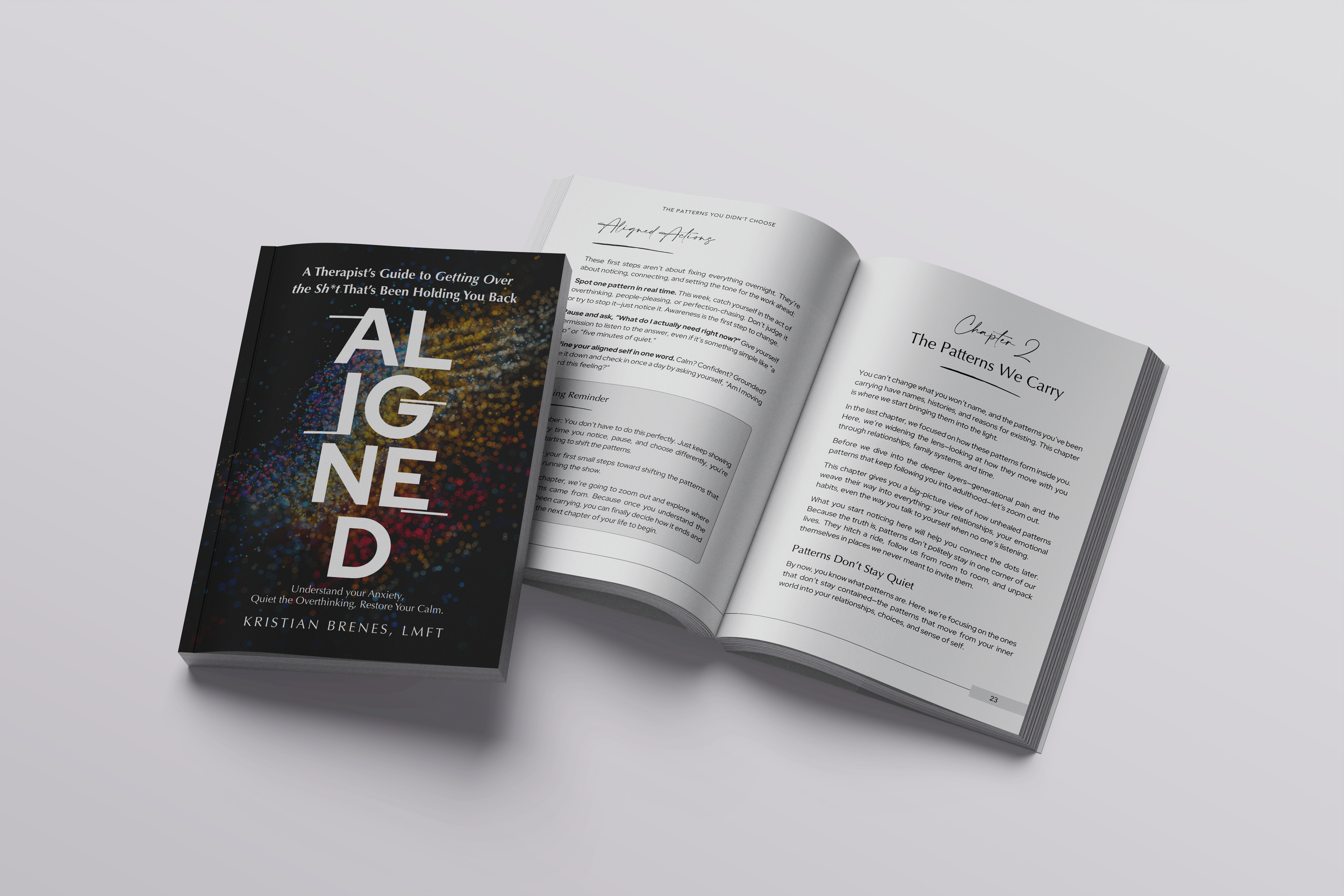
I wrote my book, Aligned: A therapist’s guide for Overthinkers, for you. 📖
A guide for the overthinkers, people-pleasers, and anyone ready to stop letting anxiety and self-doubt hold them back.
Grab your copy here:
[Grab your copy]